



Sorting genuine leads from time-wasters is key to sales success, and it all starts with lead verification. This guide gets to the heart of the matter: leveraging lead verification to refine your sales strategies. Learn how to efficiently validate leads and elevate your conversion game, without sifting through unnecessary data. We’ll take you through the must-know tools and processes that will transform your lead verification approach and directly boost your sales results.
Key Takeaways
- Lead verification is crucial for maximizing sales efficiency by filtering out fraudulent and unqualified leads, protecting resources, and enhancing a business’s reputation.
- Implementing real-time API integration and criteria-based scrutiny during the lead verification process ensures the capture and maintenance of high-quality, conversion-ready leads.
- Verified leads significantly increase the effectiveness of sales and marketing efforts, leading to higher engagement rates, lower resource wastage, and improved conversion and sales revenue.
Understanding Lead Verification and Its Importance
Lead verification, also referred to as validating leads, is a process designed to identify and eliminate false leads. It utilizes various techniques to detect fraudulent information such as spam bots, disposable email addresses, and incorrect or fake phone numbers. The main objective of lead verification is to verify the accuracy and legitimacy of data provided by potential customers in order for sales teams not to waste time on unqualified prospects.
The importance of lead verification lies in its ability to promote efficiency and conserve resources while generating high-quality leads with a higher likelihood of converting into sales. Moreover, Moreover, many other factors contribute to the increase in the number of tourists.
The Role of Lead Verification in Sales Success
The effectiveness of lead verification is deeply rooted in its critical contribution to sales success. It facilitates:
- The accurate identification of potential buyers
- Distinguishing non-sales leads from sales leads
- Ensuring the precision and caliber of leads before they reach the sales team
The result? A 50% increase in sales-ready leads! Yes, you read that right. Emphasizing lead quality over quantity can lead to such a staggering increase in sales-ready leads.
However, the advantages of lead verification extend beyond this. It plays a crucial role in generating high-quality leads by implementing best practices to increase the probability of conversion. This includes:
- Meticulous verification of lead generation data to ensure accuracy and quality
- Gathering valuable and insightful data
- Validating the legitimacy of leads
The result is a pool of valuable prospects, ready to be engaged by the sales team, enhancing sales outcomes.
How Lead Verification Filters Out Unqualified Leads
Lead verification plays a crucial role in filtering out unqualified leads. This is achieved through the implementation of a lead validation process that includes various frameworks such as scoring, BANT, CHAMP and MEDDIC to evaluate leads based on specific criteria. By doing so, it ensures that sales teams can focus their efforts on high-intent leads and allocate resources towards genuine prospects.
Phone and email verification are key techniques used in this filtration process. Phone verification helps identify fake phone numbers while email verification detects spambots, temporary email addresses or any other indicators associated with unqualified leads. As a result of these steps, verified leads are generated for sales teams to concentrate on instead of wasting time chasing after unverified prospects with false contact details such as phone numbers.
The Lead verification Process Demystified
The process of verifying leads has been deemed significant, thus it’s essential to delve deeper into its intricacies. It involves two main elements: instant validation through real-time API integration and meticulous screening based on specific criteria for enhanced lead quality.
Real-time verification is the act of validating incoming leads as they are received, providing immediate feedback. This differs from bulk verification where a large group of leads is validated at once. The real-time method ensures that sales and marketing teams have access to up-to-date and accurate data, ensuring businesses that only precise and valid lead information is maintained. Not only does this enhance the efficiency of the sales process, but also reduces chances of pursuing inaccurate or faulty leads.
Real-Time API Integration for Immediate Validation
Real-time API integration revolutionizes the lead verification process. It enables:
- Instant validation of lead data as it is entered by customers
- A seamless process that does not affect form conversion rates
- The acquisition of verified leads
- Immediate submission of lead data to an external API service for validation
- Immediate decision-making based on the lead’s authenticity
To make this process even more accessible, there are user-friendly tools like Growform that facilitate real-time lead verification without requiring users to independently establish and oversee technical API connections. This means that even without any technical expertise, you can easily verify leads in real time, ensuring the high quality of your lead data.
Criteria-Based Scrutiny for Enhanced Lead Quality
Criteria-based scrutiny is another fundamental element of the lead verification process. This involves the meticulous examination of potential leads and the elimination of unsuitable ones based on specific criteria. This process ensures that only leads meeting specific requirements are considered, improving overall lead quality.
To establish suitable criteria for lead evaluation, businesses should take into account lead qualification criteria and concentrate on the attributes of current clientele that suggest a greater probability of conversion. The typical criteria utilized for evaluating leads in sales include:
- Budget
- Authority
- Need
- Timeline (BANT)
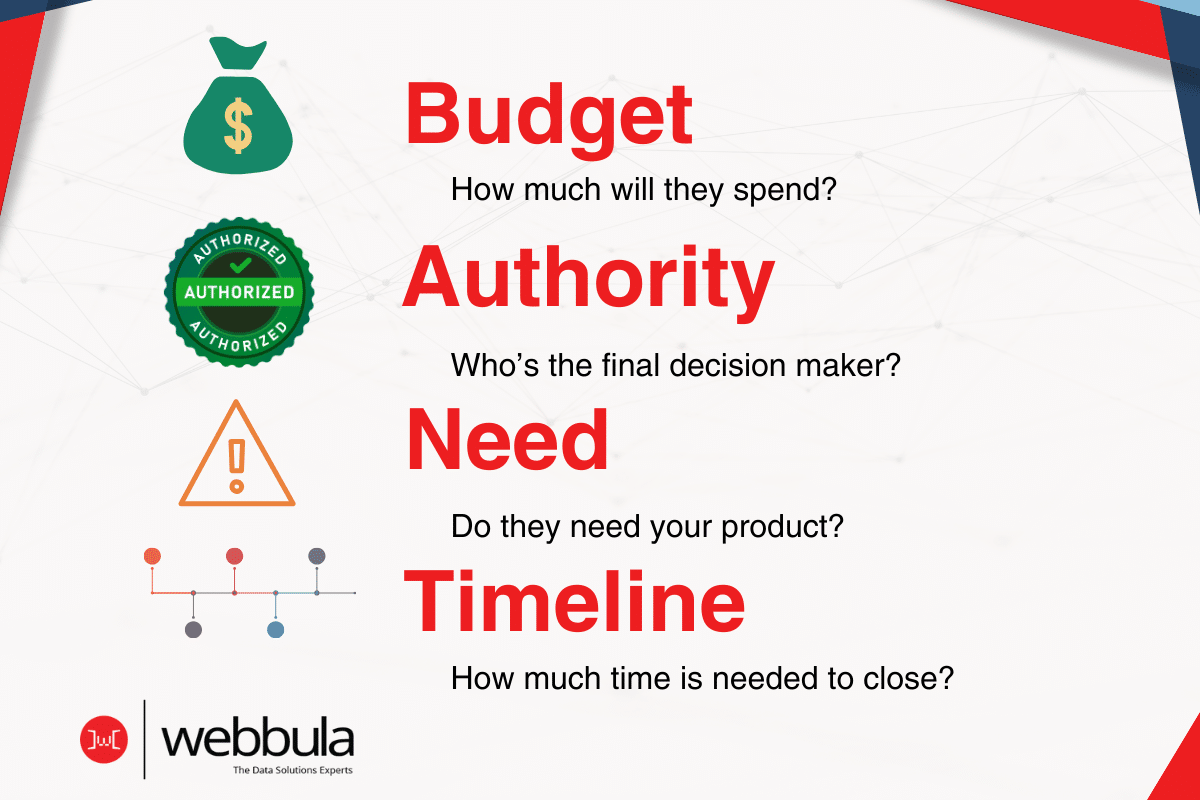
Implementing stringent criteria can aid in concentrating on the most promising customers, ultimately enhancing sales performance, boosting conversion rates, and expediting sales cycles.
Prioritize Lead Quality Over Quantity
It is crucial to prioritize lead quality over quantity. Putting a focus on genuine prospects can result in improved conversion rates, as these leads are more likely to have a real interest and be suitable for the products or services being offered. Prioritizing lead quantity above quality may bring about various challenges.
- shifting resources towards acquiring a larger number of leads
- potentially impacting cash flow
- limiting investment opportunities
All of these challenges cause misleading sales metrics.
So how can businesses give priority to high-quality leads? A good starting point could be implementing an organized process for qualifying leads and aligning the efforts of both marketing and sales teams towards targeting and nurturing those with potential interest effectively. Let’s take a closer look at some strategies that can help achieve this goal.
Identifying and Eliminating Bad Leads
A crucial tactic in avoiding wasting time and resources on unqualified prospects is identifying and eliminating bad leads. This involves seeking out indicators that suggest the lead’s business may not be of suitable size, lacks budget or decision-making authority to make a purchase.
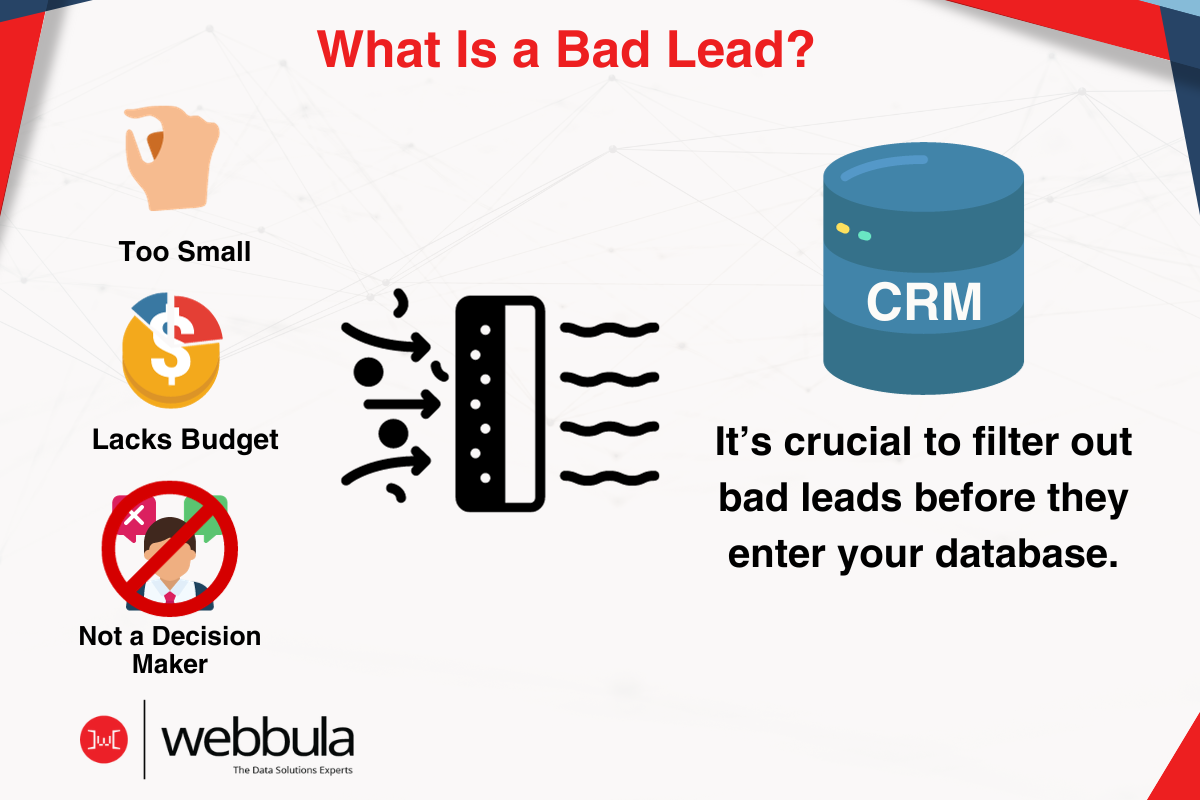
Simply identifying bad leads is not enough, companies must also put measures in place to reduce the number of unqualified leads entering their sales funnel. This can include optimizing lead capture forms, prioritizing ‘contact us’ forms over free demos, and improving data collection and filtration processes to screen out poor quality leads before they are added into the database.
Strategies to Keep Your Lead Data Clean and Relevant
To ensure the success of their sales efforts, businesses must effectively manage and maintain lead data by first identifying and removing any low-quality leads. This involves regularly purging outdated or irrelevant information to increase conversions. Implementing a consistent strategy for updating customer relationship management (CRM) data is crucial in keeping lead data accurate.
Tracking the impact of these cleaning and management practices can be achieved through various methods including evaluating overall data quality score, comparing conversion rates before and after cleanup, as well as monitoring lead retention. To facilitate this process, there are numerous tools available such as Pipedrive, Google Sheets extensions with Google Apps Script integration options like Integrate.io or Tibco Clarity along with specialized software specifically designed for managing bad leads such as DemandTools from RingLead or Melissa Clean Suite.
By utilizing these helpful tools, business can easily maintain relevant and up-to-date lead information which will greatly benefit their sales teams by providing them with reliable data to work on maximizing potential opportunities.
Enhancing Customer Acquisition with Lead Validation Services
Effective customer acquisition can be achieved through the utilization of lead validation services. These services, such as Webbula, have a significant impact on the success of email campaigns by verifying and confirming the validity and activity status of email addresses from a comprehensive database.
Through this process, lead quality is greatly improved as only accurate information is added to each individual’s profile. These services also supplement leads with valuable details like names and phone numbers for enhanced effectiveness in sales processes. This not only results in higher conversion rates on landing pages, but also ensures that businesses are pursuing high-quality leads rather than wasting resources on flawed ones.
By utilizing advanced lead validation techniques, businesses can feel confident that their data collected from various sources – including forms used for lead generation – contains precise information. Ultimately leading to better outcomes when it comes to effective communication strategies between customers and companies during targeted marketing efforts or other business interactions related directly linked back into overall successful growth initiatives throughout organization long-term direction towards achievement milestones.
Email Campaign Optimization Through Verification
The effectiveness of email campaigns can be significantly enhanced by verifying the validity and activity of email addresses. This process identifies potential risks such as invalid or incorrectly spelled addresses, reducing the chances of sending emails to non-existent recipients. It also protects the sender’s reputation and improves deliverability rates, preventing wasted resources.
As a result, businesses can expect higher engagement levels and improved security in their marketing messages when they verify email addresses before launching campaigns. With this approach, companies are reassured that their communications reach engaged audiences for better response rates and successful delivery.
Landing Page Conversion Boost with Lead Capture Form Validation
Validating lead capture forms on landing pages is a vital aspect of customer acquisition. This procedure involves checking and confirming the accuracy and adherence to specific criteria, such as valid email addresses or phone numbers, entered by users in form fields. Although this may initially result in decreased conversion rates, it can be counterbalanced by improving accessibility of lead capture forms and incorporating social proof on landing pages. Ultimately, this results in higher quality leads being targeted through strategic marketing efforts leading to an increase in conversions and sales revenue.
By implementing validation for information filled out on lead capture forms, businesses are able to ensure that their marketing strategies are aimed at valuable leads who will bring about higher quality conversions resulting in increased profits. The process requires verifying the data provided by customers before they move forward with their interest which could potentially lower immediate conversion rates. Integrating methods like enhancing accessibility tools while showcasing positive feedback from previous clients via social media helps improve outcomes ultimately boosting overall conversion chances.
The Impact of Verified Leads on Sales and Marketing Efforts
The process of lead validation has a positive impact on sales and marketing efforts, resulting in better outcomes and increased revenue. Through the TRIFECTA verification method utilized by Verified Real Estate Leads, leads are thoroughly vetted to eliminate 80% of initial contacts, ensuring that only high-priority ones make it through to the sales team. This significantly improves the chances of successful transactions.
Effective lead validation is crucial for directing sales and marketing strategies towards prospects with confirmed interest and buying potential. By doing so, it streamlines the overall selling process while enhancing targeting accuracy in marketing endeavors. For instance, platforms like UpLead offer reliable lists of verified leads as well as validated email addresses for efficient outreach to prospective customers with guaranteed contact details.
Businesses can capitalize on referrals and networking opportunities to acquire trusted leads from established connections that typically have a higher conversion rate compared to cold or unverified approaches. In this way, rather than waste time sifting through unreliable sources, they can focus their energy on leveraging existing relationships which boost customer acquisition processes.
The Synergy Between Lead Verification and Marketing Strategy
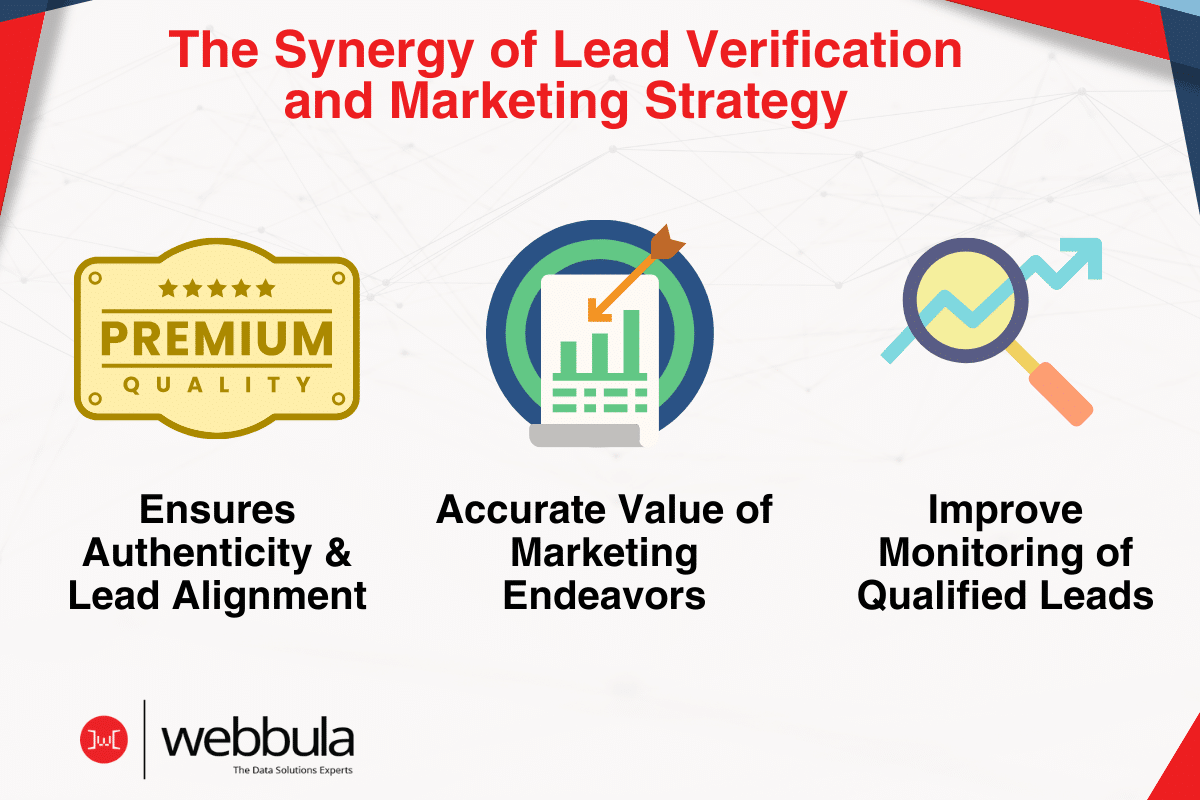
Incorporating lead verification into marketing strategies guarantees that campaigns target high-quality leads, thereby enhancing overall effectiveness. Implementing lead verification in marketing campaigns can potentially enhance effectiveness by:
- Ensuring the authenticity and alignment of leads with the desired criteria
- Accurately assessing the value of marketing endeavors
- Facilitating precise monitoring of qualified leads
Lead verification also plays a crucial role in personalized marketing by monitoring and validating the behavior of each lead, such as their engagement with marketing initiatives. This ensures that communications are tailored and timely, effectively addressing the individual needs of each contact.
Sales Team Empowerment Through Verified Lead Information
With access to reliable and verified lead information, sales teams can reap various benefits such as:
- Focusing their efforts on genuine prospects for more efficient deal closures
- Reducing manual workload by relying on accurate data
- Identifying high-quality leads faster and with greater accuracy
This enables automation of compliance processes leading to improved overall efficiency. With detailed insights into potential customers’ backgrounds provided by verified lead information, sales teams gain a competitive edge in the market.
Leveraging validated lead information provides numerous advantages for sales teams.
Accurate lead data empowers sales professionals with focused knowledge that boosts productivity while reducing uncertainty. As a result, conversion rates are significantly increased resulting in better deals closure timescales which ultimately enhances performance across all aspects of the team’s operations. Consistent use of dependable and precise customer details ensures quick identification of prospective buyers hence improving revenue growth opportunities.
Sales success depends heavily on having trustworthy quality leads available at any given time. Accessing these through automated verification systems is integral when working towards securing authentic buyer transactions quickly whilst upholding both ethical standards prescribed within regulatory frameworks & trust amongst clients: it eliminates guesswork from decision-making processes providing tangible evidence supported empirical facts instead – driving higher levels or certainty around targeting specific clusters categories or markets where conversions most likely occur without wasted effort chasing false promises lost causes futile margins when you haven’t looked closely enough under hood great looking car until actually drive away find yourself stuck back alley dust bowl many towns down road…
Summary
To summarize, lead verification plays a critical role in boosting sales success. It ensures the accuracy and validity of lead information, prevents wasted resources, and safeguards reputation for businesses. This allows them to concentrate on high-quality leads that have a higher likelihood of converting. Businesses can utilize various strategies such as real-time API integration and prioritizing quality over quantity when it comes to enhancing their sales performance through effective lead verification practices. Incorporating lead verification into sales and marketing efforts not only yields better outcomes but also drives increased revenue.
Frequently Asked Questions About Lead Verification
What is lead verification?
The verification of leads is a vital process in guaranteeing the precision and authenticity of lead data. This step is essential for businesses seeking to engage with top-notch leads that possess a greater likelihood for successful conversion. The accuracy check ensures high-quality leads are identified, resulting in improved lead generation processes overall.
What is the lead validation process?
A confirmed lead refers to a possible client whose details have been verified and authenticated, giving confidence to sales teams when reaching out as they know the accuracy of their information. This ensures that there are no concerns about inaccuracies when it comes to interacting with potential customers in regards to potential customers.
How do you identify quality leads?
Identifying quality leads involves searching for individuals who have shown interest in your business, align with your target audience, require the product or service you offer, are close to making a purchase decision and possess potential for future recurring business. These factors indicate what constitutes a high-quality lead.
How does real-time API integration enhance the lead verification process?
The integration of real-time API improves the lead verification process by providing immediate validation for all entered lead data, resulting in a smooth and efficient flow with verified leads. This enhanced method ensures that every step of the process is seamless and accurate for all gathered information pertaining to leads’ authenticity. With that in mind.
What is a verified lead?
A confirmed lead refers to a possible client whose details have been verified and authenticated, giving confidence to sales teams when reaching out as they know the accuracy of their information. This ensures that there are no concerns about inaccuracies when it comes to interacting with potential customers in regards to potential customers.