
Demographic
Reach audiences based on self-reported demographic attributes and verified household insights.
Webbula audience segments help advertisers reach real people using deterministic signals and self-reported behaviors. Our segments are built from verified consumer data and continuously refreshed signals, helping brands activate more accurate audience targeting across programmatic platforms.
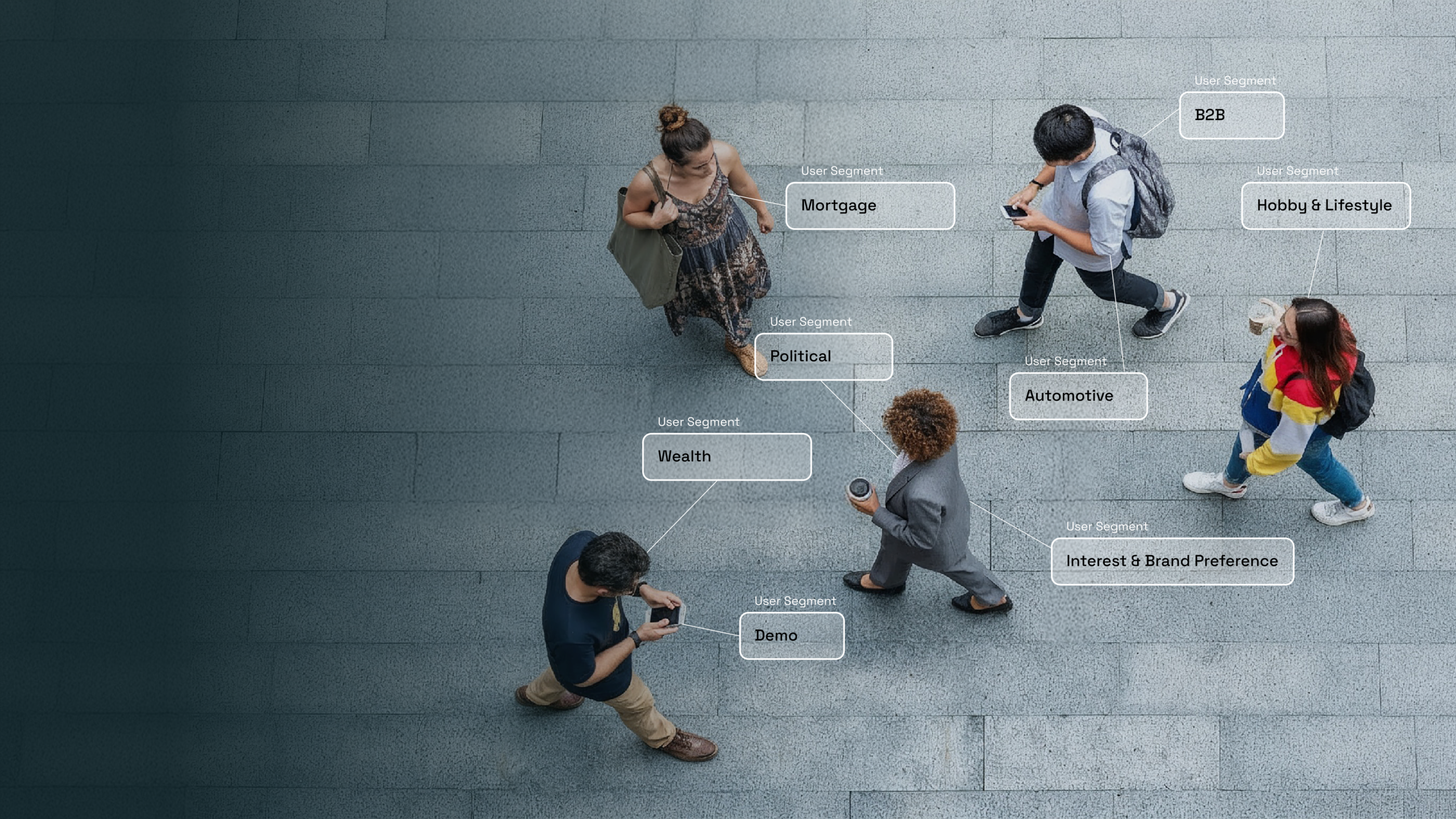
Webbula provides a wide range of audience segments designed to help advertisers reach relevant consumers with precision. Each category includes curated segment sets available through downloadable guides.
Reach audiences based on self-reported demographic attributes and verified household insights.

Engage audiences based on political affiliation, issue alignment, and voter behavior signals.

Reach consumers actively researching, purchasing, or owning specific vehicle types and automotive products.

Target audiences based on lifestyle interests, hobbies, and consumer activities.

Identify high-value audiences using income signals, asset indicators, and purchasing behaviors.

Reach consumers researching mortgage options or preparing for home financing decisions.

Target audiences using declared brand affinities and consumer preference signals.

Reach professionals and business decision-makers across industries, company sizes, and professional roles.
Webbula audience segments are built on deterministic signals and self-reported behaviors. Instead of modeled assumptions, our segments reflect verified consumer data continuously refreshed to maintain accuracy and reliability.
Our data methodology emphasizes:
Yes. Many programmatic campaigns combine multiple signals to create custom segments. For example, advertisers may combine demographic indicators, purchase intent signals, and lifestyle interests to identify high-value audiences for a specific campaign.
Deterministic segments are built from signals tied to verified identifiers rather than inferred device graphs. This approach can help advertisers improve targeting confidence and reduce reliance on probabilistic assumptions.
Reliable audience datasets require continuous updates. Signals can change over time as people move, change jobs, or alter purchasing behavior. Webbula continuously evaluates signal activity and removes outdated attributes when signals are no longer active.
Audience segments are created by combining multiple data attributes associated with a single identity profile. These attributes may include demographic indicators, declared interests, behavioral signals, and transactional events. When combined, they allow advertisers to target groups of people with shared characteristics.
Common segment categories include demographic attributes, lifestyle interests, purchasing intent indicators, financial characteristics, automotive ownership signals, and professional or business attributes. Webbula segments are organized around deterministic signals and self-reported consumer information.