


In the ever-evolving landscape of digital advertising, the impending sunset of the Google Chrome cookie phase out has sent ripples through the industry, prompting a seismic shift in how brands connect with their audiences.
This pivotal moment, driven by growing privacy concerns and regulatory changes, marks the end of an era dominated by cookie-based targeting strategies. However, as one door closes, another opens with the advent of artificial intelligence (AI) and machine learning (ML) technologies.
These innovative tools are not merely stepping into the breach left by cookies; they are paving the way for a revolution in targeted advertising that promises to be both more effective and more respectful of consumer privacy.
The transition to AI and ML in advertising goes beyond merely responding to the challenges posed by moving away from traditional cookies. It marks a leap forward into a future where advertisers can achieve personalized advertising without compromising user trust.
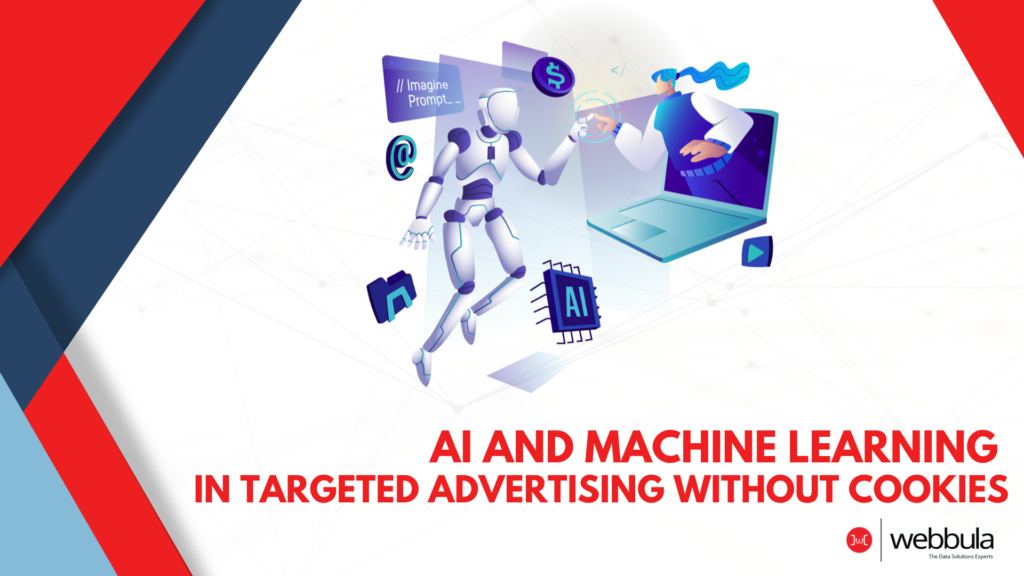
This blog explores the transformative role of AI and machine learning in crafting targeted advertising strategies that thrive in a post-cookies world. We delve into how these technologies are reshaping the approach to personalized ads, offering insights into the mechanisms at play, and providing a roadmap for marketers aiming to navigate this new terrain. Join us as we uncover the potential of AI and ML to redefine targeted advertising, ensuring that brands can continue to deliver relevant, engaging content in a way that champions privacy and innovation.
Key Takeaways:
- Adapting to Change: The digital advertising landscape is undergoing a significant transformation with the phasing out of third-party cookies, a move driven by increasing privacy regulations and shifting consumer expectations.
- Embracing AI and ML: Artificial Intelligence (AI) and Machine Learning (ML) emerge as pivotal technologies, enabling advertisers to target audiences more effectively and efficiently in a privacy-conscious manner.
- Innovative Targeting Strategies: AI and ML are at the forefront of developing new targeting strategies, such as predictive analytics and behavior modeling, that do not rely on traditional cookie data.
- Privacy and Personalization Balance: These technologies offer a pathway to achieving a delicate balance between personalizing ads and safeguarding user privacy, ensuring that advertising is both relevant and respectful.
Leveraging AI and ML for Advanced and Privacy-Conscious Advertising
Understanding the Shift
- From Cookies to Context: Traditionally, digital advertising has relied on third-party cookies to track users’ online activities and serve targeted ads. However, growing concerns over privacy and data protection are reducing their use, as major browsers phase them out and legislation like GDPR and CCPA introduce stricter regulations.
- The Privacy Paradigm: The move away from cookies is part of a broader shift towards a more privacy-centric web. Consumers are increasingly aware of their digital footprint and demand greater control over their personal information, prompting advertisers to seek alternative methods for targeting.
The Role of AI and Machine Learning
- Beyond Cookies: AI and ML offer sophisticated tools to analyze vast amounts of data from various sources, identifying patterns, preferences, and behaviors without relying on personal identifiers from cookies. This enables advertisers to predict consumer needs and interests with a high degree of accuracy.
- Predictive Analytics: Leveraging historical data, AI algorithms can forecast future consumer behavior, allowing for the personalization of ads based on predicted interests and activities. This approach is not only more privacy-friendly but also potentially more accurate than cookie-based targeting.
- Real-Time Optimization: ML models continuously learn from new data, enabling them to optimize ad targeting in real time. This adaptability ensures that advertising campaigns remain relevant and engaging, even as consumer preferences evolve.
In this section, we’ve laid the groundwork for understanding the significant shift in digital advertising and introduced the role of AI and ML as game-changing technologies. Next, we’ll explore how AI and ML contribute to privacy-friendly targeting and look at practical examples and strategies for marketers to leverage these technologies effectively.
Implementing AI and ML: Practical Insights and Strategies for Future-Ready Advertising
Privacy-Friendly Targeting with AI
- Aggregated and Anonymized Data: AI and ML technologies can process and analyze aggregated data, which helps in identifying trends and patterns without compromising individual privacy. This approach respects user consent and regulatory requirements, ensuring advertisers can target effectively without accessing sensitive personal information.
- Federated Learning and Differential Privacy: These advanced techniques allow for the training of ML models on decentralized data sources. Federated learning enables AI models to learn from data stored on users’ devices without the data leaving the device, while differential privacy introduces randomness into datasets, further protecting individual identities. Both methods empower advertisers to refine targeting strategies while upholding stringent privacy standards.
Examples of AI in Action
- Contextual Advertising: With the decline of cookies, contextual advertising has seen a resurgence. AI and ML enhance this approach by analyzing webpage content at a granular level, allowing for the placement of ads in more relevant contexts, improving engagement without relying on personal user data.
- Behavioral Modeling and Customer Journey Mapping: AI tools can model consumer behavior and map customer journeys by analyzing first-party data and signals from consumer interactions. This enables advertisers to predict purchase intent and tailor ads to different stages of the customer journey, enhancing the relevance and effectiveness of campaigns.
- Real-Time Bidding Adjustments: AI algorithms can analyze performance data in real-time, making automatic adjustments to bidding strategies to maximize ad effectiveness and ROI. This dynamic approach allows for more efficient use of advertising budgets and higher conversion rates.
Strategies for Marketers
- Invest in First-Party Data: With the decline of third-party cookies, collecting and leveraging first-party data becomes crucial. Encourage users to share their data by offering value in return, such as personalized experiences or rewards.
- Ethical AI Use: Make sure you adhere to ethical standards and privacy regulations in your AI-driven advertising strategies. Be transparent with users about the ways you use their data and give them control over their information.
- Embrace AI and ML Tools: Actively explore and adopt AI and ML tools that suit your advertising needs. Numerous platforms now provide AI-powered solutions for targeting, optimization, and analytics, all designed with privacy compliance in mind.
- Continuous Learning and Adaptation: The AI and ML landscape is rapidly evolving. Stay informed about the latest developments and be prepared to adapt your strategies. Continuous learning and experimentation will be key to leveraging AI and ML effectively in the post-cookies era.
Elevating Programmatic Advertising with AI and ML in a Post-Cookies Era
As the digital advertising ecosystem evolves away from third-party cookies, programmatic advertising stands at the forefront of adopting AI and ML technologies to maintain efficiency and effectiveness.
Programmatic advertising automates the buying and selling of ad inventory in real-time through an algorithmic process, making it a cornerstone of modern digital advertising strategies. In a post-cookies landscape, the role of AI and ML in programmatic advertising becomes increasingly critical, offering new pathways to achieve targeted and personalized advertising at scale.
Targeting Without Cookies
As third-party cookies decline, programmatic platforms are using AI and ML to analyze first-party data, contextual signals, and aggregated user behaviors. This shift allows advertisers to target audiences based on content relevance, user interests, and predictive behavior modeling. It ensures that ads reach the right audience at the perfect moment without infringing on individual privacy.
Enhanced Bidding Strategies
AI and ML algorithms excel in optimizing bidding strategies for programmatic advertising. By analyzing vast datasets in real-time, these technologies can adjust bids for each ad impression based on the likelihood of achieving the desired outcome, whether it’s clicks, conversions, or engagement. This dynamic approach maximizes ROI by ensuring advertisers pay the optimal price for each ad placement, based on real-time market conditions and campaign performance data.
Improved Ad Performance and ROI
AI-driven programmatic advertising enhances targeting and bidding, and it also boosts overall ad performance and ROI. Machine learning algorithms constantly learn from campaign data, refining ad delivery to make it more relevant and effective. Using AI for creative optimization allows automatic adjustments in ad formats, messaging, and placements, resonating with specific audiences and enhancing engagement rates.
Future-Proofing Programmatic Advertising
As the digital advertising world moves away from reliance on cookies, AI and ML provide the tools necessary for programmatic advertising to thrive. By embracing these technologies, advertisers and platforms can ensure that programmatic remains a powerful and efficient method for reaching audiences at scale. The future of programmatic advertising in a post-cookies era looks promising, with AI and ML leading the way in innovation and privacy-centric targeting.
Concluding Remarks
The end of third-party cookies heralds a new era in digital advertising, one where AI and machine learning play a central role in delivering targeted, efficient, and privacy-conscious advertising. By embracing these technologies, marketers can navigate the post-cookies landscape successfully, ensuring that their advertising strategies remain effective and competitive.
As we move forward, the balance between personalization and privacy will be paramount, and AI and ML offer the tools necessary to achieve this balance, promising a future of advertising that is both innovative and respectful of consumer rights.
Commonly Asked Questions About Targeted Advertising Post-Cookies
What are third-party cookies and why are they going away?
Websites other than the one a visitor is currently viewing generate third-party cookies, which are tracking codes placed on the visitor’s computer. These cookies have played a significant role in targeted advertising and analytics. However, growing privacy concerns and the increasing demand for personal data control are leading browsers to phase them out. Similarly, legislation like Europe’s GDPR and California’s CCPA has sped up their decline, nudging the industry towards practices that are more conscious of privacy.
How do AI and machine learning compensate for the loss of cookie-based data?
AI and machine learning can analyze large datasets to identify patterns, trends, and consumer behaviors without relying on the individual tracking that cookies provided. These technologies use aggregated and anonymized data, predictive analytics, and real-time optimization to deliver targeted advertising. They can predict consumer preferences and intentions, enabling personalized advertising that respects privacy concerns.
Are there any privacy concerns associated with AI-driven targeted advertising?
AI-driven targeted advertising presents a more privacy-friendly option than cookie-based methods, but it still raises privacy concerns. Users find it challenging to grasp how their data gets used due to the risk of misusing personal data and the complexity of AI algorithms being the main issues. To address these concerns, it’s crucial to ensure transparency, secure user consent, and comply with data protection laws.
How can businesses start integrating AI into their advertising efforts?
Businesses can start by collecting and analyzing first-party data with AI and machine learning tools to gain insights into customer behavior and preferences. Investing in AI-powered advertising platforms and tools that offer targeted advertising capabilities without relying on cookies is also crucial. Additionally, businesses should stay informed about AI and ML advancements and continuously experiment with new technologies and strategies to refine their advertising efforts.
What are the expected trends in AI and machine learning for advertising over the next few years?
Experts expect the use of AI and ML in advertising to grow more sophisticated, as advancements in predictive analytics, natural language processing, and computer vision enhance personalized advertising.
Privacy-preserving technologies like federated learning and differential privacy will gain prominence. We’ll also see an increase in the integration of AI with other emerging technologies, such as augmented reality (AR) and the Internet of Things (IoT), to create more immersive and interactive advertising experiences. Additionally, the focus on ethical AI use and transparency will continue to grow, ensuring that advertising practices align with consumer expectations and regulatory requirements.