


Data quality is the lifeblood of all organizations. High-quality data enables confident marketing, personalized experiences, and improved profitability. Yet, many companies struggle with incomplete, inaccurate, or missing information in their databases. Kissmetrics reports that businesses lose up to 20% of revenue due to poor data quality. This significant impact underscores why improving data quality is essential for business growth.
In this article, we will explore the causes of poor data quality, the components of good data quality, the benefits of maintaining high-quality data, and how Webbula, the Data Solutions Experts, can help you achieve superior data quality.
What is Data Quality?
Understanding Data Quality
Data quality refers to the condition of a dataset that meets the needs of its intended use. High-quality data is accurate, complete, consistent, and timely. These attributes ensure that the data can be effectively used for analysis, decision-making, and operational processes.
Components of Good Data Quality
- Data Accuracy: Accurate data reflects the real-world scenario it represents without errors. Ensuring data accuracy is crucial for making reliable business decisions.
- Data Completeness: Complete data contains all necessary information, with no missing elements. High completeness means no gaps that could hinder analysis or decision-making.
- Data Consistency: Consistent data remains uniform across different datasets and systems. Consistency ensures that data does not conflict when integrated from multiple sources.
- Data Integrity: Integrity involves maintaining and assuring the accuracy and consistency of data over its lifecycle. This includes safeguarding data from unauthorized alterations.
- Data Timeliness: Timely data is available when needed, without delays. It is crucial for time-sensitive decision-making processes.
- Data Reliability: Reliable data is dependable and stable over time, consistently providing accurate and complete information.
- Data Relevance: Relevant data meets the specific needs of its intended use, ensuring it supports business objectives effectively.
Understanding these components helps organizations implement effective data quality management practices, ensuring their data remains a valuable asset.
Causes of Poor Data Quality
Identifying the Causes of Poor Data Quality
Several factors contribute to poor data quality in organizations. Understanding these causes is the first step toward implementing effective data quality management.
- Incomplete or Inaccurate Data: Data that lacks essential information or contains errors is a common issue. Incomplete data can result from manual data entry errors, system migrations, or integration issues.
- Inconsistent Data: Data inconsistencies arise when different systems or departments use varied standards or formats. This lack of uniformity leads to conflicting information across datasets.
- Data Entry Errors: Human errors during data entry, such as typos or incorrect values, contribute significantly to poor data quality.
- Outdated Data: Over time, data can become outdated and irrelevant. Regular data maintenance is necessary to ensure data remains current and useful.
- Low Quality Data from External Sources: Relying on third-party data sources can introduce low quality data if those sources do not adhere to high data quality standards.
- Emerging Data Quality Challenges: With the increasing volume and complexity of data, new challenges continuously emerge. These include managing large datasets, integrating various data types, and ensuring data quality in real-time environments.
Recognizing these causes allows organizations to address and mitigate poor data quality issues proactively. Implementing robust data quality measures and utilizing effective data quality tools can significantly improve overall data quality.
The 10 Benefits of Data Quality
- Confidence and Trust
Good data quality fosters confidence and trust. Surprisingly, many companies still lack confidence in their data. KPMG’s Global CEO Outlook found that 84% of CEOs worry about data quality. Implementing a solid data quality strategy builds customer trust.
- Enhanced Brand Reputation
Bad data can tarnish your brand reputation. Data leaks or failure to comply with regulations are major issues. Protecting your brand is crucial and maintaining high-quality data is a significant step.
- Cost Savings
Maintaining high-quality data eliminates the cost of fixing bad data. Salesforce research shows that the average B2B brand loses over 1 million dollars annually due to email churn.
- Time Savings
Good data quality reduces the need for double-checking, backtracking, and worrying about data accuracy. It streamlines data maintenance and saves valuable time.
- More Effective Marketing Campaigns
Understanding your audience leads to better campaign results. High-quality data allows you to create targeted content and ads that resonate with your audience.
- Improved Audience Targeting
Without high-quality data, marketers struggle to target specific audiences and resort to broader, less efficient targeting. Precise data enables better audience targeting.
- Better Decision-Making
High-quality data improves decision-making across the organization. Confidence in your data leads to more informed and effective decisions.
- Stronger Customer Relationships
Customers are your top priority. Collecting appropriate data helps build stronger relationships. High-quality data ensures you understand and meet customer needs.
- Compliance with Data Protection Laws
Rest easy knowing your data complies with regulations like GDPR, the EU’s comprehensive privacy and data protection law. High-quality data ensures compliance and peace of mind.
- Increased Profitability
High-quality data can boost profitability. It allows you to create effective marketing campaigns, increase sales, and keep your VP of Sales happy.
Factors That Contribute to Data Quality
Understanding the Key Factors
Integrating the visual representation of data quality factors can help illustrate these concepts clearly. The graphic below outlines six essential factors that contribute to the quality of your data:
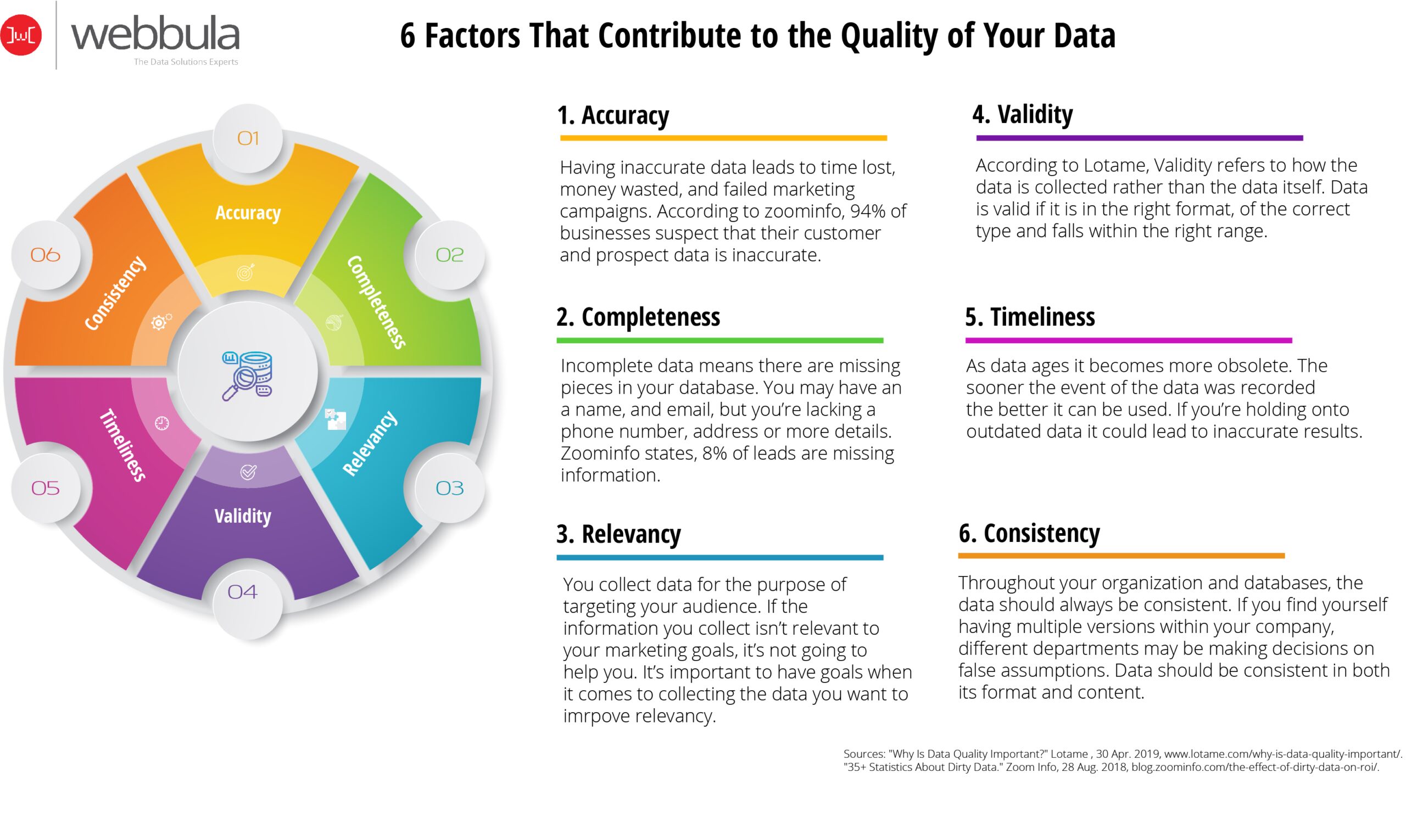
- Accuracy: Ensuring data is correct and free from errors.
- Completeness: Making sure no data is missing and all necessary information is available.
- Relevancy: Collecting data that meets the needs of your business objectives.
- Validity: Ensuring data is collected and recorded properly.
- Timeliness: Keeping data up-to-date and available when needed.
- Consistency: Maintaining uniform data across all systems and databases.
Understanding and focusing on these factors help organizations maintain high data quality, supporting better decision-making and operational efficiency.
How to Maintain High Data Quality
Strategies for Maintaining High Data Quality
Maintaining high data quality requires a combination of effective strategies, tools, and best practices. Here are some key approaches:
- Use Data Quality Management Tools: Implement data quality management tools to monitor, clean, and manage your data. These tools help identify and rectify errors, ensuring your data remains accurate and reliable.
- Regular Data Quality Assessment: Conduct regular data quality assessments to evaluate and improve your data’s accuracy, completeness, and consistency. This proactive approach helps identify issues before they impact your business operations.
- Adopt Data Quality Best Practices: Follow best practices for data quality management, such as standardizing data entry processes, validating data at the point of entry, and establishing data governance policies. These practices help maintain consistent and high-quality data.
- Train Data Entry Personnel: Ensure that personnel responsible for data entry are well-trained and understand the importance of data accuracy. Proper training reduces human errors and enhances data quality.
- Implement Data Governance: Establish a data governance framework to manage data quality across the organization. This includes defining data standards, roles, and responsibilities to ensure data is handled correctly and consistently.
- Leverage Data Quality Metrics: Use data quality metrics to measure and track the performance of your data quality initiatives. Metrics such as error rates, data completeness, and data consistency help you monitor progress and make informed improvements.
- Automate Data Quality Processes: Utilize automation to streamline data quality processes, such as data validation, cleansing, and integration. Automation reduces manual efforts and enhances efficiency, ensuring timely and accurate data.
By adopting these strategies, organizations can effectively maintain high data quality, supporting better decision-making and operational performance.
Webbula’s Solutions for Improving Data Quality
How Webbula Can Help You Improve Your Data Quality
Webbula offers a range of solutions designed to enhance and maintain high data quality. Here’s how we can help:
Email Hygiene
Webbula’s Industry Leading Multi-Method Email Hygiene identifies hidden threats in your email data. Unlike simple verification providers, we detect spam traps, moles, bots, honeypots, and other harmful threats. Protect your sender reputation and deliverability with our advanced technology. Learn more about our Email Hygiene now.
LeadHygiene for Web Forms
Webbula’s LeadHygiene service validates information in your forms through our real-time API and batch file processing. By integrating LeadHygiene, you can confirm the accuracy of names, addresses, phone numbers, and email addresses. This integration eliminates fraudulent activity, increases deliverability, improves ROI, and enhances customer experience.
Data Appends
If you’re missing customer data, Webbula can enhance your list with missing information like emails, addresses, phone numbers, and demographic segments. Our Data Appends solution helps you understand your customers’ interests and behaviors, enabling targeted and effective email campaigns.
We also create audiences using data from 100+ reliable sources, including publisher partners, surveys, transactional events, social media, and more. Webbula’s data undergoes rigorous hygiene processes to ensure accuracy. Once complete, we send the data to onboarders for ad targeting campaigns. Our extensive data can fuel the most demanding campaigns.
Conclusion
Recap and Final Thoughts
High-quality data is crucial for any organization’s success. It fosters confidence, enhances brand reputation, saves costs, and improves decision-making. By understanding the components of good data quality, identifying causes of poor data quality, and implementing effective strategies, businesses can maintain high data quality.
Webbula offers comprehensive solutions to help you achieve and sustain superior data quality. From email hygiene to data appends, our services ensure your data remains accurate, complete, and reliable. Invest in data quality today to unlock your organization’s full potential.
Commonly Asked Questions
1. What are the benefits of data quality?
The benefits of data quality are numerous and impactful for businesses. High-quality data ensures accurate and reliable information, which leads to better decision-making and increased confidence in business strategies. Here are some key benefits:
- Improved Decision-Making: Accurate data supports more informed and effective decisions across the organization.
- Enhanced Brand Reputation: Maintaining high data quality helps avoid data breaches and compliance issues, protecting your brand’s reputation.
- Cost Savings: High-quality data reduces the need for costly data cleaning and correction efforts, saving resources and time.
- Effective Marketing Campaigns: With reliable data, businesses can create targeted marketing campaigns that resonate with their audience, leading to higher engagement and conversion rates.
- Stronger Customer Relationships: Good data quality allows for better understanding and engagement with customers, fostering loyalty and satisfaction.
2. What are the benefits of information quality?
Information quality, often used interchangeably with data quality, focuses on the usefulness and accuracy of information for decision-making and operational processes. The benefits include:
- Enhanced Operational Efficiency: High-quality information streamlines processes and reduces errors, improving overall efficiency.
- Better Compliance: Accurate information helps ensure compliance with regulatory requirements, avoiding legal issues and fines.
- Informed Strategy Development: Quality information provides a solid foundation for developing effective business strategies and achieving organizational goals.
- Risk Reduction: Reliable information helps identify and mitigate risks more effectively, protecting the business from potential threats.
- Customer Trust and Satisfaction: Providing accurate and relevant information builds customer trust, leading to improved satisfaction and loyalty.
3. What is the impact of data quality?
The impact of data quality on an organization can be profound. High-quality data enhances all aspects of business operations and strategy. Some key impacts include:
- Revenue Growth: Accurate and complete data supports better sales and marketing efforts, leading to increased revenue.
- Operational Excellence: Good data quality reduces inefficiencies and errors, improving overall operational performance.
- Strategic Advantage: High-quality data provides insights that help businesses stay competitive and make proactive decisions.
- Compliance and Risk Management: Ensuring data quality helps meet regulatory standards and manage risks effectively.
- Customer Engagement: Quality data enables personalized and effective customer interactions, boosting engagement and retention.
4. What are the 5 points of data quality?
The five points of data quality, also known as dimensions, are essential for maintaining high data standards. These include:
- Data Accuracy: Ensures that the data correctly represents the real-world scenario it is intended to model. Accurate data is free from errors and discrepancies.
- Data Completeness: Refers to the extent to which all required data is present. Complete data ensures that no critical information is missing.
- Data Consistency: Involves maintaining uniformity across different datasets and systems. Consistent data avoids conflicting information when integrating from multiple sources.
- Data Integrity: Focuses on maintaining and ensuring the accuracy and consistency of data over its lifecycle. Integrity involves protecting data from unauthorized alterations.
- Data Timeliness: Ensures that data is available when needed. Timely data is crucial for making prompt and informed decisions, especially in fast-paced business environments.